Why Hydration Is More Than Just Drinking Water
Mar 08, 2026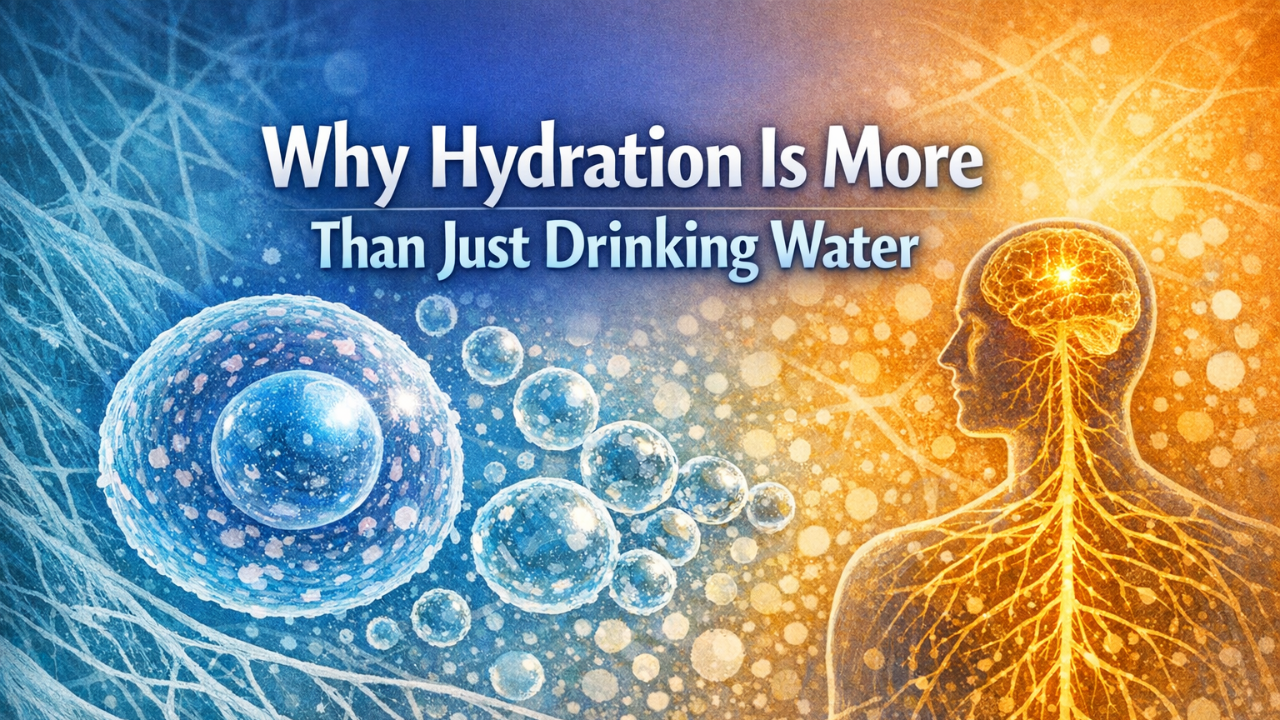
Why Hydration Is More Than Just Drinking Water
When people think about hydration, they usually think about one thing:
Drinking more water.
While water intake matters, true hydration is far more complex than simply how much water you drink.
At Baseline Health™, hydration is understood as a system, not a single behavior. It involves how fluid moves through the body, how tissues hold and release water, and how the nervous system regulates that process.
When this system functions well, the body moves easily, tissues stay resilient, and recovery happens efficiently. When it doesn’t, the body begins to feel stiff, fatigued, and restricted.
The Body Is a Hydrated Network
Roughly 60 - 70% of the human body is water, but that water doesn’t just sit inside us like liquid in a container.
It moves through an intricate biological environment that includes:
-
cells
-
connective tissue
-
fascia
-
blood vessels
-
lymphatic pathways
Fascia plays a major role here. It acts like a living matrix that allows structures to glide and communicate.
When fascia is hydrated, it stays elastic and responsive. When hydration decreases, fascia becomes dense and sticky, reducing glide and increasing stiffness.
This often shows up as:
-
morning stiffness
-
reduced mobility
-
chronic tightness
-
recurring aches
-
slower recovery
Hyaluronan: The Body’s Natural Lubricant
Hyaluronan (HA) is a molecule in the extracellular matrix that can hold up to 1,000 times its weight in water.
When HA is hydrated, tissues move like warm oil. When it becomes viscous, more like cold honey, movement feels restricted.
This is why people often feel stiff after sitting still for long periods. The system simply needs movement and circulation to restore glide.
Mechanical Hydration: Why Movement Matters
Hydration isn’t just chemical - it’s mechanical.
Movement helps circulate fluid through connective tissues and encourages nutrient exchange.
Even small movements help restore fluid flow:
-
gentle bouncing
-
slow mobility work
-
breath‑driven expansion
-
walking
These create subtle pressure changes that move fluid through the fascial network.
The Nervous System’s Role in Hydration
Stress influences hydration more than most people realize.
When the nervous system is in fight‑or‑flight:
-
breathing becomes shallow
-
muscle tone increases
-
circulation shifts
-
digestion slows
This reduces fluid distribution and contributes to stiffness.
One of the first steps in restoring hydration is nervous system regulation.
Hydration as Rhythm
At Baseline Health™, hydration is treated as a daily rhythm supported by:
-
consistent fluid intake
-
mineral balance
-
regular movement
-
breathing patterns
-
adequate sleep
-
stress regulation
These elements maintain the body’s internal fluid environment.
Restoring Tissue Glide
Healthy tissues should feel:
-
smooth
-
responsive
-
fluid
When tissues lose glide, movement feels:
-
restricted
-
tight
-
effortful
Restoring glide requires both chemical hydration and mechanical movement: a core part of the REALIGN phase of The Baseline Method™.
The Bigger Picture
Hydration is not just about drinking more water.
It’s about creating an internal environment where the body can move fluid efficiently and maintain healthy tissue behavior.
When this system works well, people often notice improvements in:
-
mobility
-
energy
-
recovery
-
circulation
-
overall comfort
Small daily habits can create surprisingly large changes.
Baseline Health™ Cell‑First Health Reset • Realign • Recover™
Lorem ipsum dolor sit amet, consectetur adipiscing elit. Cras sed sapien quam. Sed dapibus est id enim facilisis, at posuere turpis adipiscing. Quisque sit amet dui dui.
Stay connected with news and updates!
Join our mailing list to receive the latest news and updates from our team.
Don't worry, your information will not be shared.
We hate SPAM. We will never sell your information, for any reason.